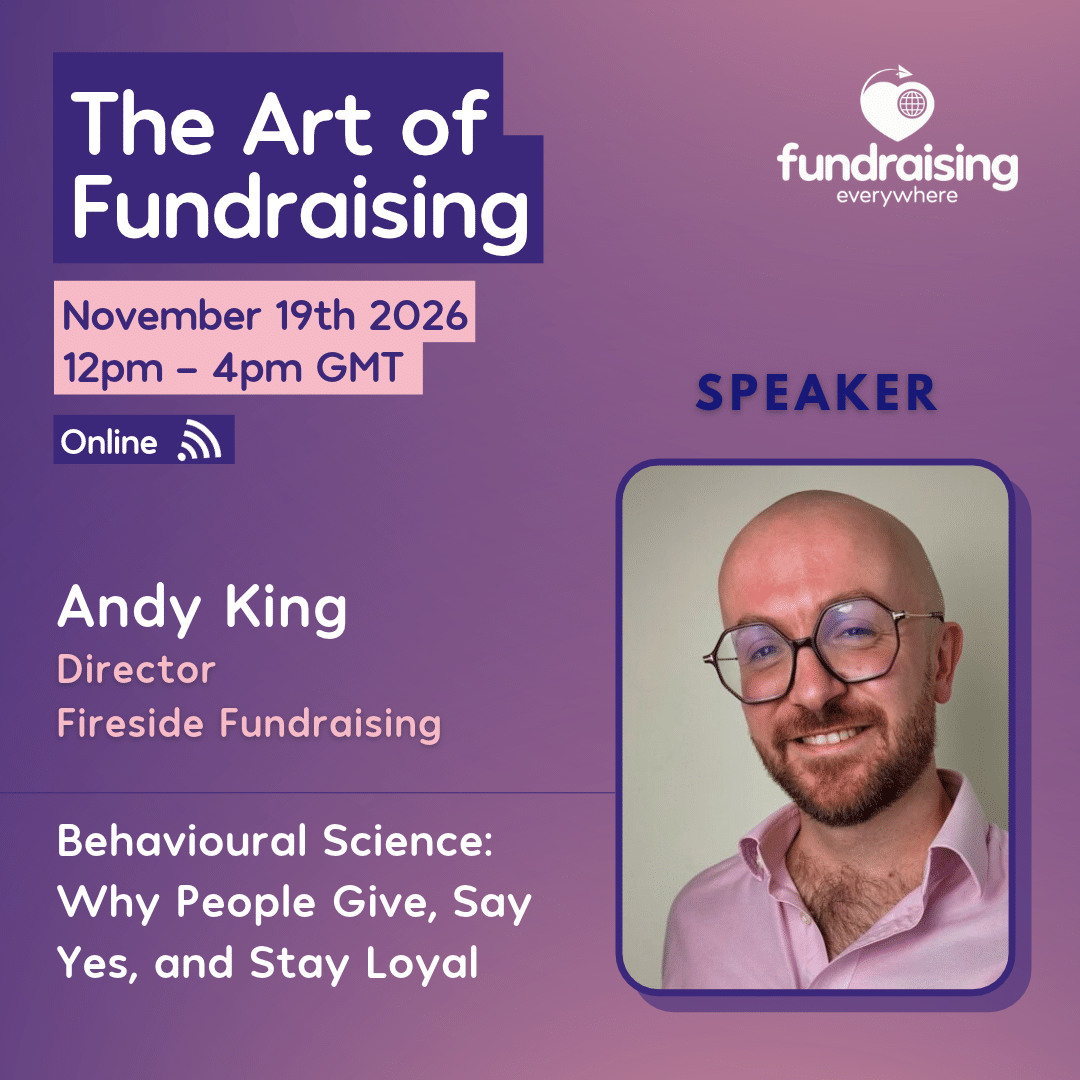
Behavioural Science: Why People Give, Say Yes, and Stay Loyal
Unlimited access from £25.00 / month
Become a member to gain unlimited access to our extensive content library, packed with valuable resources and insights on fundraising. Plus, stay ahead of the curve with free entry to all our upcoming events.
Detail
Fundraising advice often focuses on what to ask for, but behavioural science helps us understand why people give in the first place… and, just as importantly, why they keep giving. In this session, we’ll explore the psychology behind charitable giving, drawing on behavioural science to uncover the factors that influence initial giving and long-term loyalty.
We’ll look at how motivations differ between first-time and repeat supporters, consider both individual and organisational contexts, and examine the practical changes charities can make to improve their fundraising.
You’ll leave with a simple framework of questions to test your own fundraising approaches, helping you build stronger relationships and create supporter experiences that encourage people not only to say yes today, but to keep saying yes for a long time to come.
Key learnings from this session:
- The key drivers that encourage people to give for the first time.
- What keeps supporters giving, and how this differs from initial motivation.
- Practical questions to help apply behavioural science to your own fundraising.
Speakers

Andy King
Director

Related Talks

How to get comfortable with the unknown: The uncertainty toolkit
Uncertainty isn’t going away, but you can get better at handling it: a fresh way to think about ambiguity, plus habits and techniques to hold steady when everything shifts.

Turning stats into stories: communicating numbers
How SELFA blends evidence and lived experience to turn data into stories that win funders’ hearts and heads, while telling them with people, not just about them.

Managing Up: Winning Internal Buy-In for Your Work
How to win buy-in from senior leaders at any level: present new ideas with confidence, keep momentum going, and back yourself when the answer is no.
Navigating difficult conversations
How to stay grounded in difficult conversations: understand your responses under pressure, de-escalate without going passive, and challenge without making things worse.